
I was stopped over with one of my oldest friends — I’ve known her since junior college, before that, even — when I learned she reads tarot cards on New Year’s Day. This surprised me, she’s science-y, a real nerd of a human. I found it puzzling that she should turn to something so esoteric in search of answers about the direction of the year.
“The cards don’t lie,” she said, shuffling the deck.
I confessed to a passing curiousity about tarot and she gave me a deck from her collection; she had several she’d acquired over the years.”Leave it in your vacation rental if you don’t like it,” she said. “I don’t need it back.”
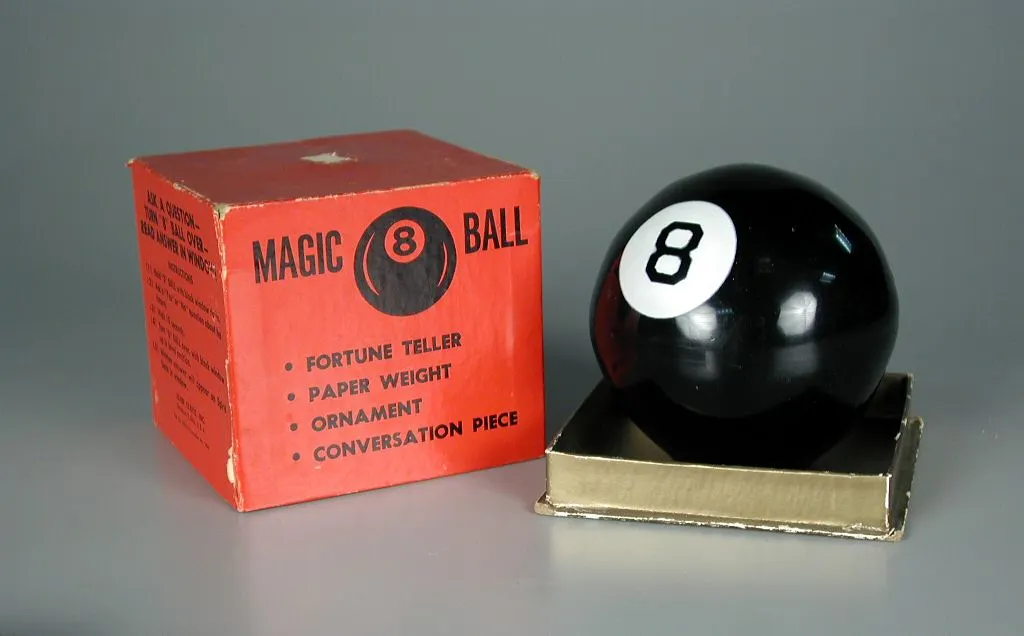
The cards came with a sort of dictionary that defines what each card means and a series of diagrams showing you how to lay out your spread. There were guidelines around what to ask, what question to hold in your mind, as you read the cards. No yes-or-no questions, the cards are not a Magic Eight Ball.
That deck stayed behind, it lives in Moab, Utah. I found the art both too realistic and too Ren Fair fantasy at the same time. But my curiousity was not quite satisfied. I liked the structured thinking reading the cards requires and I believed the right deck would find me.
Months later I was walking Harley the Dog and we came across a little free library housing a like new deck of tarot cards — the whole kit, the book, the box, a nice little satin bag in which to store your cards. I took that home and tried to work with it for a while but it had been sanitized too much. It was all woodland creatures and wholesome faeries and anything sharp had been dulled. It was cute but real life has sharp edges. After a few weeks, I packed it up and put it in another little free library in my neighborhood.
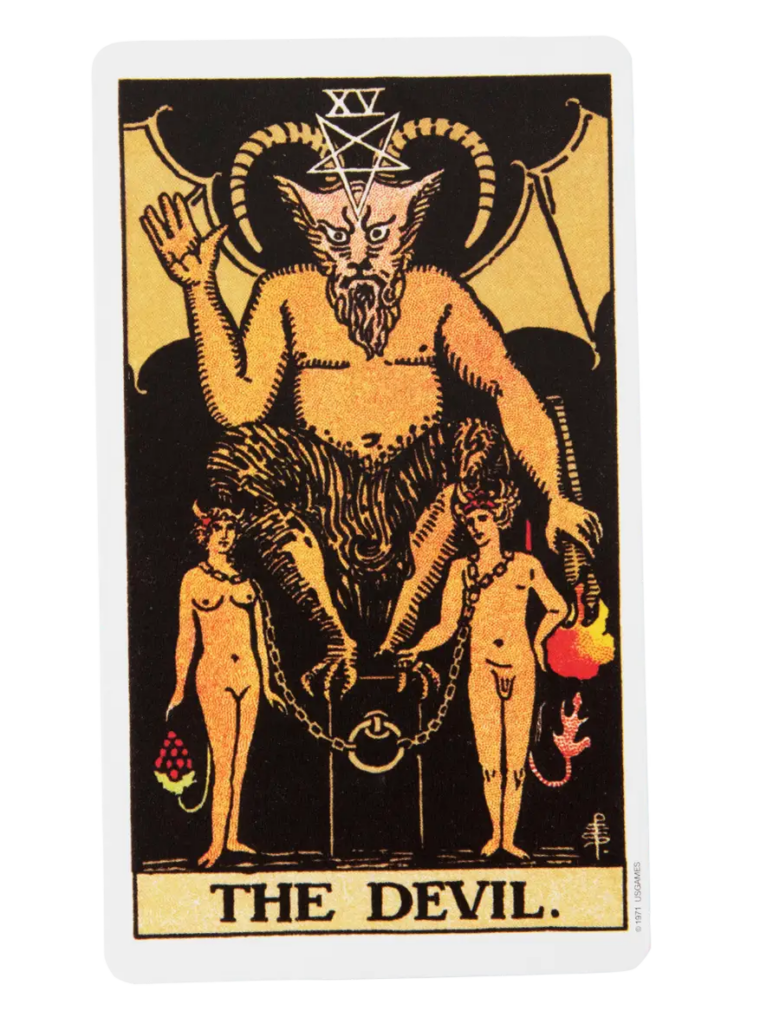
In the interim I’d mentioned to another friend that I’d been sort of learning to read the cards. Turns out he, too, reads the cards from time to time. He sent me the deck he uses — the 1909 Rider-Waite deck. I’ve been using that deck for about a year now. I immediately liked it much better than any of the remixed decks I had my hands on.
No shade to the remixed deck — some of them are stunning and the artist in me understands why you’d want to make a deck of your own. Those later decks, though, they have an additional layer of interpretation applied to them and I didn’t want that.
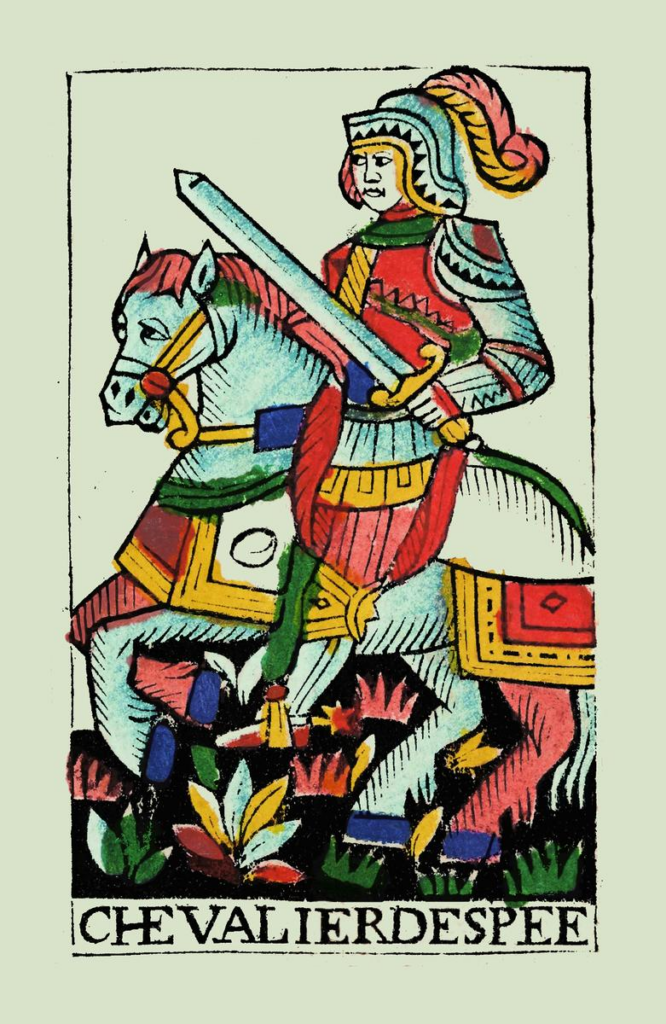
The more time I spend with the Rider-Waite deck, the more it feels too New Testament for this Jewish atheist. The devil made me do it. I had pulled the card with the devil on it and thought, “We… don’t do the devil in Judaism.” Which is why I recently acquired another deck, the Tarot of Marseille, a northern Italian deck created some time in the 14th century.
The 1400’s were not great for the Jews — to put it mildly — and the Marseille deck has been interpreted as holding deeply encoded Jewish theology. Perhaps it provided a way to learn about Judaism in a covert way in a time when anyone who was not Christian had three options: flee, convert, or die. Whether I believe in Jewish theology or not is irrelevant, what this specific interpretation provides is a vocabulary more aligned with mine.
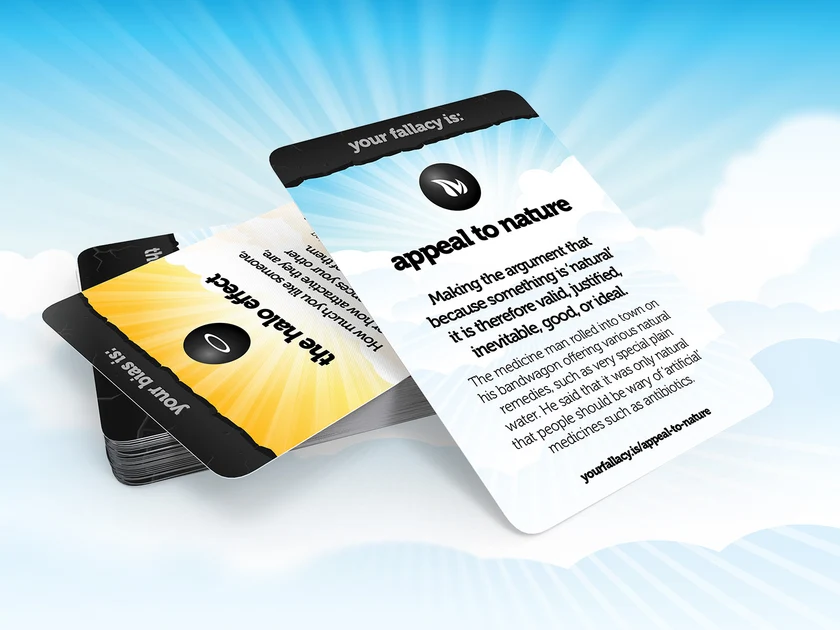
This is all a lot of set up and diversion to answering the question I imagine many of you have: What are you even doing? You consider yourself such a logical thinker, what are you doing when you let a random card shuffle shape your decision making processes!? Fair question. After all, the other deck I consult on the regular is Your Logical Fallacy Is so hey, you’re right, it’s seems contrary to how I approach the world.
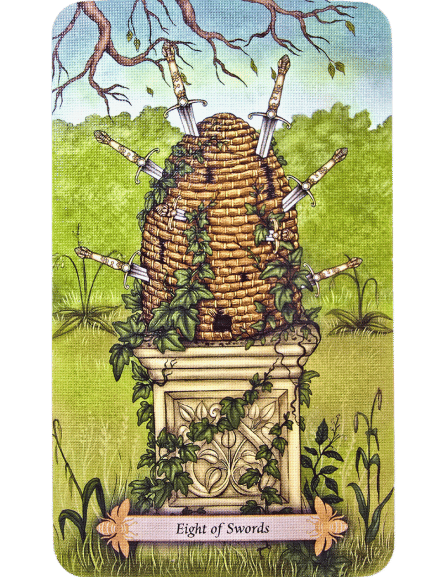
It’s all in the interpretation, man. I don’t go to the cards looking for divination or fortune telling or answers of any kind. I look for grounding questions. The hive of bees in my brain will puzzle an issue relentlessly and it can be maddening.
The cards are simply a focal point. I interpret them as asking things like what unfinished business is keeping that one bee from taking a nap? What thread is preventing that one bee from heading to new meadows? Does that other bee just need some reassuring, “You got this,” language before getting to work on something hard? The cards give me a singular lens through which to consider whatever problem I can’t stop working and to get on with my day. (Oh, look, of course there’s a bee tarot.)
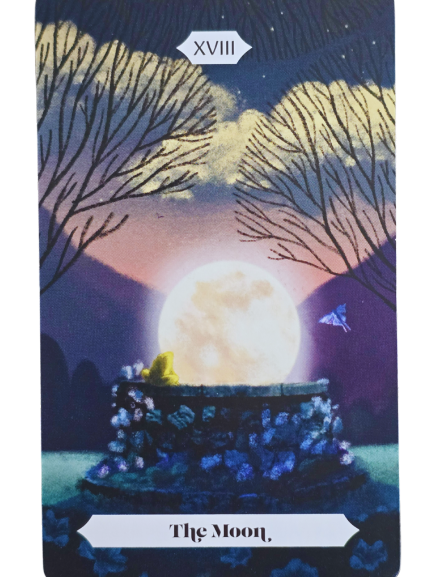
The last five years — or is it seven — have been fucking disruptive. People I care about died. I got divorced. I got fired and then, when I finally found decent work, it didn’t last. My sweet old dog got very, very ill and I thought I might lose him. For a while, the main arterial in and out of my neighborhood was closed — how’s that for a heavy handed metaphor — and we had a deadly pandemic that killed at least seven million people. And there’s the fascism, too. Is it any wonder I can’t think straight?
The cards don’t lie — my friend was right — because I don’t expect them to provide declarative truths. Every time I pull a card, it asks me the same baseline question: What if you looked at it differently? I find that helpful. There could very well be a better view just a few steps that way.
I needed this today. Thank you.
Loved reading this. I use The Wild Unknown deck.
Went to look that up, it’s really beautiful.
I use tarot similarly. I usually ask a question that will help guide me in the near future and then use the cards to either show me potentialities or another way to look at my problem. It’s quite helpful.